


Summary
Improving employee engagement starts with effective leadership. Managers play a critical role in building trust, recognizing contributions, and supporting employee growth through coaching and development. By strengthening these everyday leadership behaviors, organizations can create a workplace where employees feel valued, connected, and motivated to perform. And when leaders are engaged, they're better positioned to bring out the best in their teams.
Employee engagement is essential to organizational performance, but keeping employees motivated, connected, and committed to their work is increasingly challenging. As organizations navigate constant change, managers play a critical role in helping employees feel supported, valued, and connected to a larger purpose.
Yet many leaders are struggling with their own engagement. According to DDI's Global Leadership Forecast 2027, only 9% of leaders are fully engaged, while half are only somewhat engaged. And that matters for their teams: Fully engaged leaders are 8.8X more likely to consistently bring out the best in their team members than somewhat engaged leaders.
The connection between leadership and engagement is clear. When managers have the energy, skills, and support to lead effectively, they're better positioned to create an environment where employees can thrive.
So how can organizations improve employee engagement? Managers directly influence three areas: communication, recognition, and growth opportunities.
3 Ways to Improve Employee Engagement
Improving employee engagement doesn't always require a new initiative or program. Often, it starts with strengthening the everyday interactions employees have with their managers. Here are three ways organizations can help leaders build more engaged teams:
| Strategy | What Managers Can Do | How It Supports Engagement |
| Communication | Explain decisions, listen actively, and connect work to organizational goals. | Builds trust, clarity, and connection. |
| Recognition | Acknowledge contributions, celebrate progress, and give specific praise. | Helps employees feel valued and see their impact. |
| Coaching and Development | Provide regular feedback, discuss career goals, and create learning opportunities. | Supports growth, confidence, and commitment. |
To put these strategies into practice, managers can focus on specific behaviors that make a meaningful difference in employees' everyday experiences. Let's take a closer look at each one:
1. Develop Leaders Who Communicate Effectively
Communication is one of the most important ways leaders build trust and keep employees engaged. When employees understand what's happening in the organization, how decisions affect them, and why their work matters, they're better equipped to stay focused and contribute. This is especially important during periods of change, when uncertainty can leave employees feeling disconnected from organizational goals.
DDI's research reveals a significant trust gap. Only 25% of individual contributors strongly trust their immediate manager, while just 21% strongly trust senior leaders.
To strengthen communication and trust, managers need to do more than share updates. They should explain the reasoning behind decisions, listen to employee concerns, invite questions, and communicate consistently, especially as circumstances change.
When employees feel informed and heard, they're more likely to understand how their contributions fit into the organization's priorities.
2. Create a Consistent Rhythm of Recognition
Recognition helps employees feel that their contributions matter by showing them how their work makes a difference. But recognition shouldn't be reserved for annual performance reviews or major accomplishments. Managers have daily opportunities to acknowledge progress, celebrate contributions, and reinforce behaviors that help their teams succeed.
Recognition is most meaningful when it's specific and authentic. Rather than offering general praise, leaders should explain what an employee did well and why it mattered. For example, recognizing how someone helped a colleague solve a difficult problem reinforces both their individual contribution and the value of collaboration.
Managers have daily opportunities to acknowledge progress, celebrate contributions, and reinforce behaviors that help their teams succeed.
Consistent recognition also helps employees connect their everyday work to a larger purpose. And that sense of purpose matters for engagement.
DDI's research shows that the percentage of leaders who strongly feel their job is full of meaning and purpose has fallen seven percentage points since 2024, from 41% to 34%. While this particular data point focuses on leaders, it reinforces the importance of helping people find meaning in their work. Managers can strengthen that connection by recognizing not just what employees accomplish, but the impact of their contributions.
3. Fuel Employee Potential Through Coaching and Development
Employees are more likely to stay invested in their work when they see opportunities to learn, grow, and advance. Managers play an important role in creating those opportunities through regular coaching, meaningful feedback, and ongoing career conversations.
Coaching shouldn't happen only when performance needs improvement. It should be part of how managers support employees every day, helping them build confidence, develop new skills, and prepare for future opportunities.
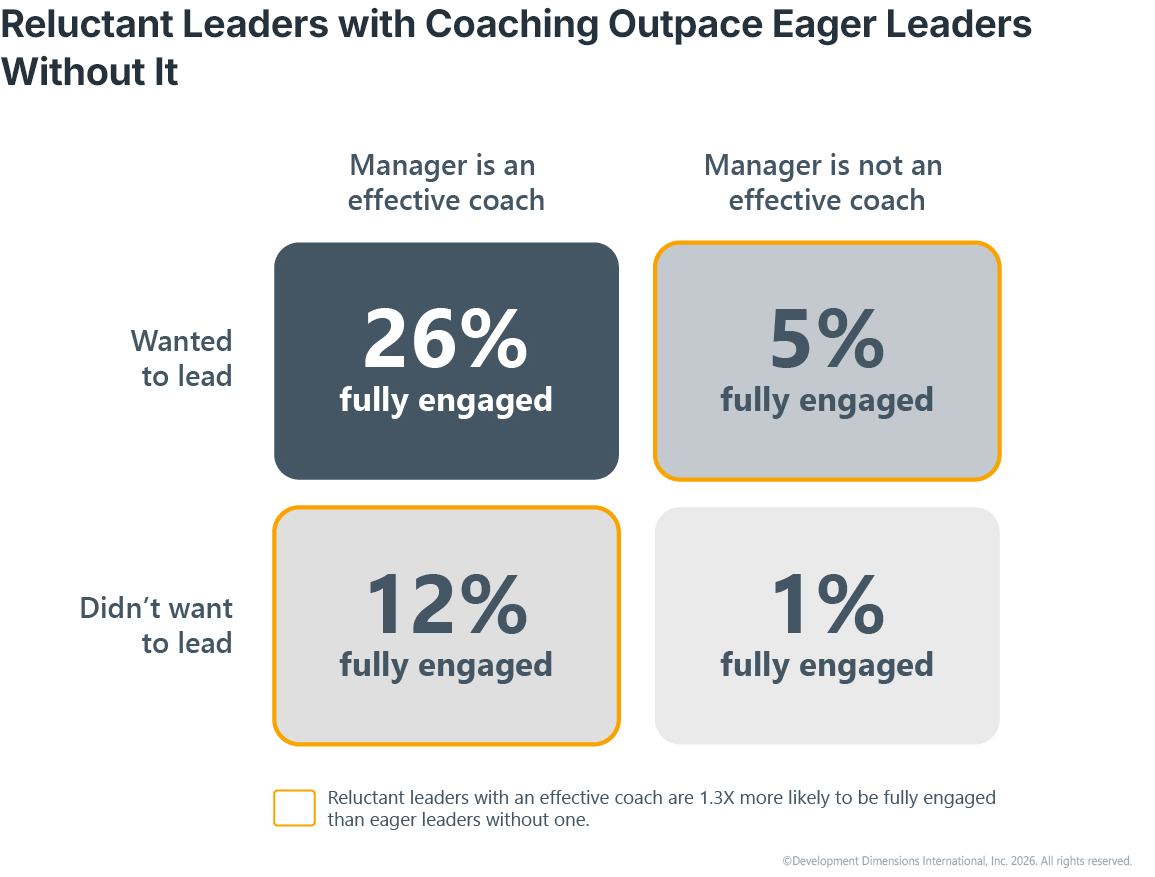
DDI's latest research on leader engagement also reflects the importance of coaching: Leaders who never wanted a leadership role but receive effective coaching from their manager are 1.3X more likely to be fully engaged than leaders who wanted to lead but don't receive effective coaching.
Strong coaching can help leaders feel more engaged and capable in their roles, even when leadership wasn't something they initially aspired to. To make that kind of support more consistent, organizations can help managers become better coaches by developing their skills in giving feedback, asking thoughtful questions, identifying development needs, and creating opportunities for employees to practice new skills.
When employees see that their manager is invested in their growth, development becomes more than an organizational offering—it becomes part of their everyday work experience.
Improving Employee Engagement Starts with Better Leadership
Employee engagement isn't something organizations can improve through surveys or recognition programs alone. What matters most is employees' everyday experiences, particularly how their managers communicate, support, and connect with them.
And organizations can't overlook managers' own engagement in the process. When leaders struggle to find energy, purpose, or support in their roles, it becomes harder to bring out the best in others.
By investing in leadership development that strengthens communication, recognition, and coaching, organizations can equip managers to create more meaningful connections with their teams. When employees feel heard, valued, and supported in their growth, they're more likely to stay engaged, contribute their best work, and build a future with the organization.
Have a Question?
Frequently Asked Questions About How to Improve Employee Engagement
-
What are the best ways to improve employee engagement?

The best ways to improve employee engagement include strengthening communication, recognizing employee contributions, and providing ongoing coaching and development. Managers play a critical role by building trust, helping employees understand their impact, and creating growth opportunities.
-
How do managers influence employee engagement?
Managers influence employee engagement through their everyday interactions with employees. Clear communication, active listening, recognition, and meaningful feedback help employees feel supported and connected to their work. Managers who build trust and invest in employee development create a stronger foundation for engagement.
-
Why is communication important for employee engagement?
Communication helps employees understand organizational priorities, expectations, and how their work contributes to larger goals. Open, consistent communication also builds trust and reduces uncertainty, especially during periods of change. When employees feel informed and heard, they're better positioned to stay connected and contribute.
-
How does coaching improve employee engagement?
Coaching improves employee engagement by helping employees build skills, overcome challenges, and see opportunities for growth. Regular coaching conversations also demonstrate that managers are invested in their employees' success. When coaching becomes part of everyday leadership, employees receive the feedback and support they need to develop and perform.
-
What's the connection between leadership and employee engagement?
Leadership shapes many of the experiences that influence employee engagement, from communication and recognition to coaching and development. Leaders' own engagement matters, too. DDI's Global Leadership Forecast 2027 found that fully engaged leaders are 8.8X more likely to consistently bring out the best in their teams than somewhat engaged leaders. Supporting leaders' engagement can help them create a more positive experience for employees.